A listing photo can make a thin ewe look round and a fat steer look ready for work. Wool, winter coat, and a low camera angle hide the bones that actually tell you whether the animal can breed, travel, or hold condition after the sale. Body condition score is the check that cuts through that.
You do not need a vet on the phone to use it. You need a scale, a hand on the right landmarks, and the nerve to walk away when the score does not match the price.
What the score is actually measuring
Body condition score (BCS) ranks fat cover over bone. It is not weight, and it is not breed type. A dairy doe and a meat doe can stand at the same kilos and sit at very different scores.
Most cattle scales run from 1 to 9, or 1 to 5 in some dairy systems. Sheep and goats are usually scored 1 to 5, sometimes in half points. On every scale, the middle is where you want a breeding or working animal.
- Low score: spine, ribs, or hip bones sharp. Little fat. The animal is drawing on reserves.
- Middle score: bones felt with firm pressure, not seen as ridges. Enough cover for breeding and a haul.
- High score: bones hard to find. Fat in the tail head, brisket, or behind the shoulder.
A low score is not automatically a bargain. A high score is not automatically healthy. Both ends cost you after the trailer leaves.
Sheep: feel the loin, do not trust the fleece
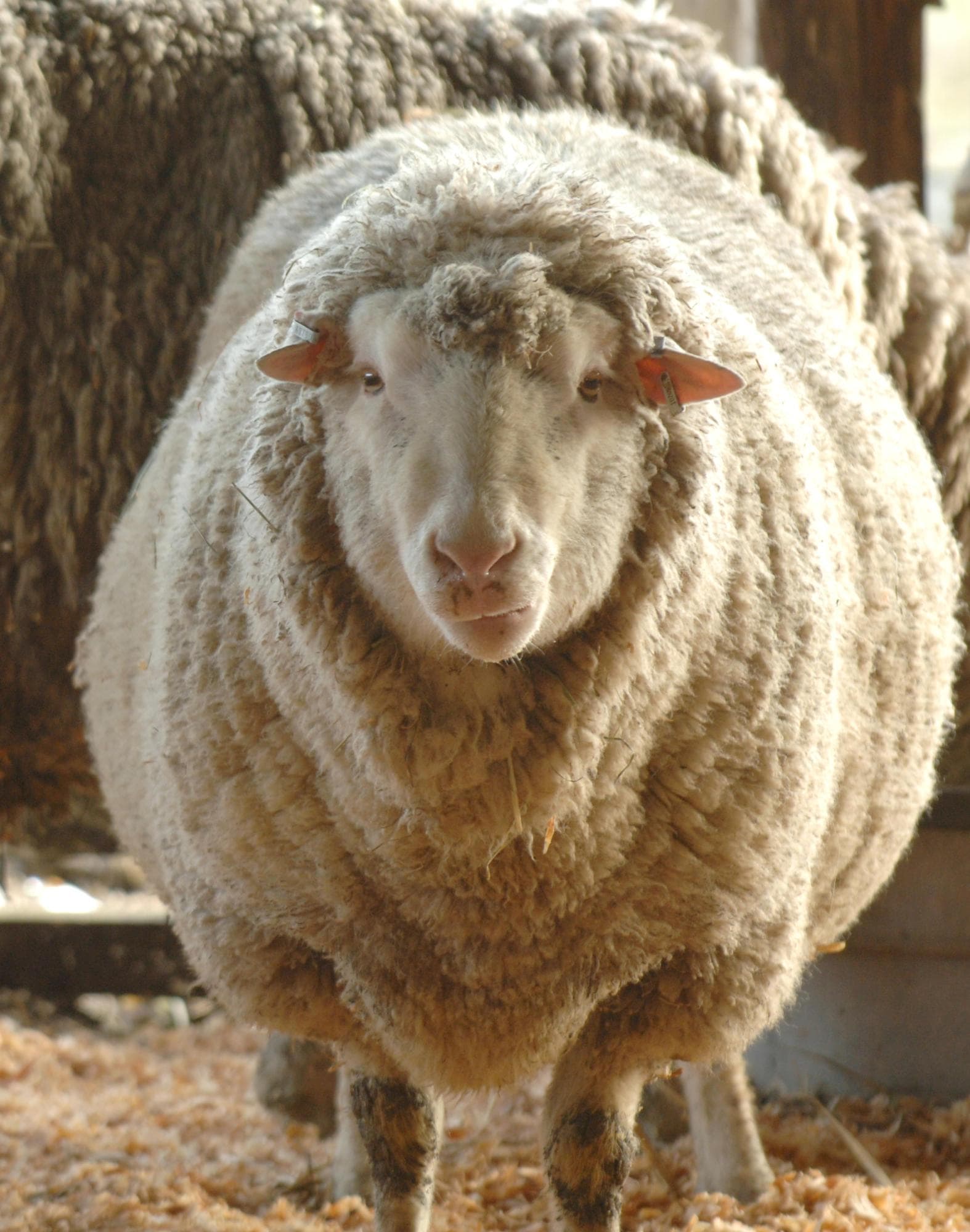
Wool is the main liar in a sheep listing. A full fleece rounds the silhouette. Part it, or ask for a photo with the hand on the loin, before you treat the animal as well covered.
Stand beside the ewe and press over the spinous processes, then out over the eye muscle, then onto the transverse processes.
A practical sheep scale
- 1 to 1.5: spine sharp, no muscle fill, transverse processes easy to wrap a finger around. Do not buy for breeding.
- 2 to 2.5: spine prominent, muscle shallow. Acceptable only if the price reflects recovery feed and you have a plan for it.
- 3 to 3.5: spine felt as a smooth ridge, muscle full, transverse processes felt with pressure. This is the band most flocks should sit in at joining.
- 4 to 5: spine hard to feel, fat rolls over the loin. Fine for a terminal lamb heading to the hook. A problem for a ewe you want to lamb without assistance.
Ask when she last lambed and whether she reared. A ewe at 2.5 three weeks after weaning is a different animal from a ewe at 2.5 that has been dry for months.
Goats: the same bones, less forgiveness
Goats carry less subcutaneous fat than sheep, so a doe can look fine in a photo and still be short of cover. Score her standing square, not stretched up on a gate.
Feel the lumbar vertebrae and the fat pad over the ribs, behind the elbow. On a meat doe, a score around 3 at breeding is a sensible target. A dairy doe in late lactation often sits nearer 2 to 2.5. That can be normal. It is not normal in a dry doe listed as "ready to breed."
Watch the sternum and the pins. Hollow pins plus a sharp spine means she has been short of feed, or she is carrying a worm burden the listing does not mention. Pair the score with FAMACHA or at least a look at the eyelid color if the seller will let you. Condition and parasites travel together.
Cattle: ribs, tail head, and the brisket
On a 1-to-9 beef scale, a cow you plan to breed should usually sit around 5 to 6. A steer you are finishing can be higher. A cow at 3 or 4 will often cycle late. A cow at 8 will often have more calving trouble than the listing admits.
What to look for on a beef animal
- Ribs: visible as individuals on a thin cow. Covered but palpable at a 5. Buried at an 8.
- Tail head: deep depressions on a thin cow. Shallow, smooth cover at a 5 or 6. Fat mounds on an overfat cow.
- Brisket: flat on a thin animal. Full and wobbling only at the top of the scale.
- Short ribs: ends sharp and easy to separate when thin. Rounded and harder to separate when covered.
A full winter coat hides ribs the way wool hides a ewe's loin. Ask for a clip photo along the ribs, or feel them yourself. Side-on listing shots taken in low sun exaggerate depth. They are not a score.
How to use the score before you pay
Do the check in this order, whether you are on the farm or bidding from photos plus a video call.
- Ask the seller for the score they would give, and which scale they use. A blank answer is information.
- Request a short clip: hand on the loin for sheep and goats, hand along the ribs and tail head for cattle. Still photos are easy to stage.
- Score the animal yourself on the visit, before you talk price again.
- Write the score next to the asking price. A 2.5 ewe is not worth the same as a 3.5 ewe from the same flock.
- If you still buy a thin animal, price in the feed and the time. Do not budget as if she will join this cycle.
Overfat animals need the same honesty. A score-5 ewe may need a controlled slim-down before joining, not an extra bag of grain because she "looks great."
What a bad score costs after the sale
Thin stock eat more to stand still. They are the first to drop further on a long haul, and the first to fail a joining. Overfat stock are harder to load, slower to move, and more likely to have lambing or calving trouble.
Neither problem shows up in a deposit screenshot. Both show up in the first month on your place, which is also when you are still inside most dispute windows. Note the score in the messages before you pay. If the animal arrives a full point thinner than agreed, you have a record, not a feeling.
Takeaways
- Score the animal, do not score the photo. Wool, hair, and camera angle fake cover.
- Sheep and goats: aim near 3 to 3.5 for breeding. Cattle: aim near 5 to 6 on a 1-to-9 beef scale.
- A low score can be a fair buy only if the price includes recovery. A high score is not a bonus on a breeding female.
- Get a hand-on clip before you travel, and write the score into the sale notes before money moves.
Occuin listings are easier to compare when sellers state a score and buyers know how to check it. Use the scale on the next animal you open, before the bid, not after the haul.