Why Minerals Matter on Pasture
Forages supply energy and protein, yet they rarely deliver a complete mineral package. Cattle and sheep pull calcium, phosphorus, sodium, magnesium, copper, zinc, selenium, cobalt, and iodine from soil through plants. Soil type, season, rainfall, and plant maturity change those levels constantly. A cow or ewe that looks full can still be short on the elements that drive immunity, fertility, hoof health, and growth.
Salt is the one mineral almost every pasture lacks. Animals seek it out, so it becomes the vehicle for everything else. Without a steady supply of the right mineral mix, you see subtle losses: slower gains, weaker calves or lambs, delayed breeding, higher treatment costs, and poorer carcass quality later.
Macro Minerals That Drive Daily Performance
Calcium and phosphorus support bone, milk, and muscle function. Mature grass is often low in phosphorus, especially on native range or phosphorus-poor soils. A 2:1 calcium-to-phosphorus ratio in the total diet keeps bones sound and reduces urinary calculi in growing males. Magnesium becomes critical in early spring when lush grass is high in potassium; low magnesium absorption leads to grass tetany in lactating cows. Sodium and chloride come mainly from salt and regulate fluid balance and nerve function. Sulfur supports rumen microbes and protein synthesis but is rarely the limiting factor on most pastures.
Trace Minerals That Quietly Limit Production
Copper, zinc, selenium, cobalt, and iodine are needed in tiny amounts yet cause large problems when missing. Copper deficiency shows as faded or steely coats, poor fertility, and weak calves. Zinc affects skin integrity, hoof hardness, and immune response. Selenium protects against white muscle disease in young stock and supports antioxidant systems. Cobalt is required for rumen microbes to synthesize vitamin B12. Iodine supports thyroid function and normal fetal development. Local soils vary widely; what is adequate in one region can be deficient fifty miles away. Antagonists such as molybdenum, sulfur, and high iron can further block copper absorption, making supplementation more important.
Practical Free-Choice Feeding
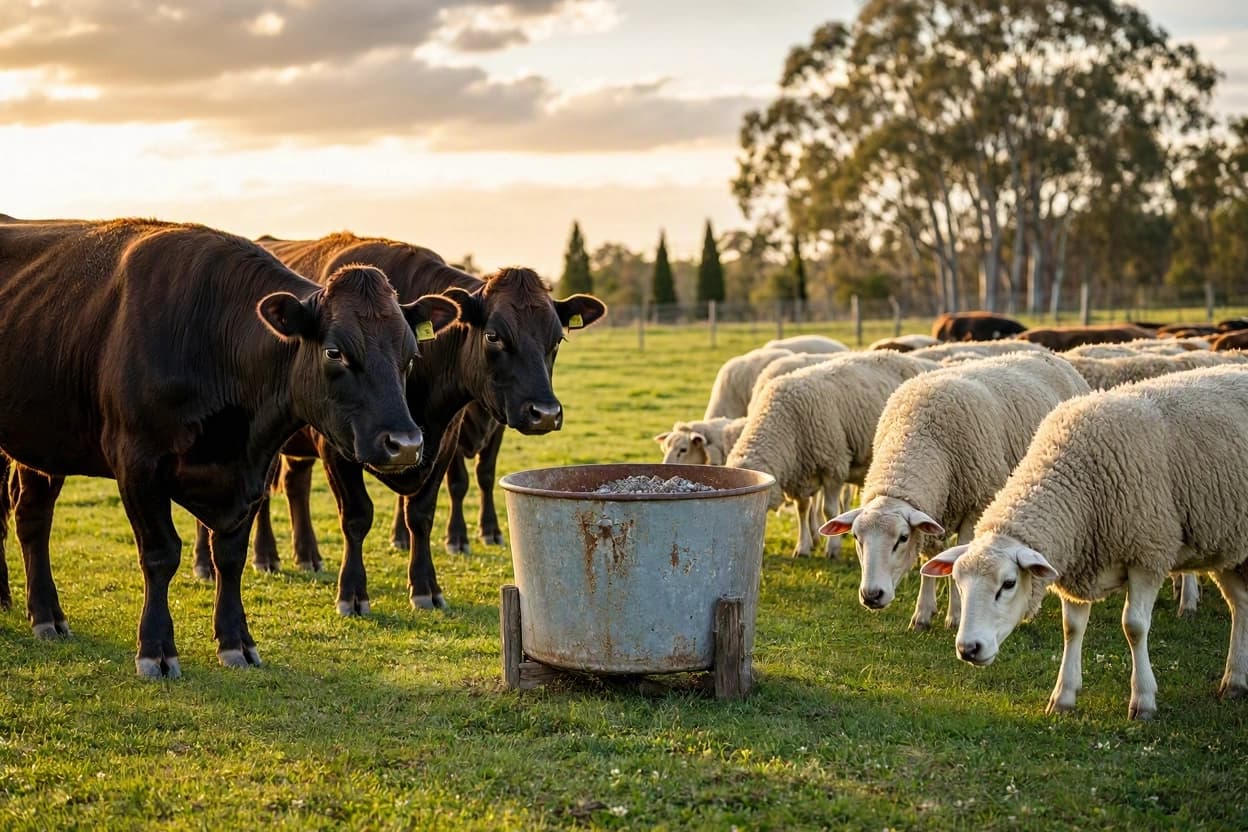
Provide a complete free-choice mineral formulated for the species and production stage. Cattle and sheep have different copper tolerances; sheep-safe mixes are lower in copper and should never be fed to cattle long-term if higher copper is needed for your region. Place one feeder for every 20–30 head near water or loafing areas so intake stays consistent. Check feeders twice a week and keep them clean and dry. Target intake is usually 2–4 ounces per head daily for cattle and proportionally less for sheep. If animals over-consume, dilute with extra salt; if they ignore it, move the feeder, change the flavor, or ensure fresh product.
High-magnesium minerals (10–15 percent magnesium from magnesium oxide) should go out at least 30 days before calving and stay until grass matures in late spring. During winter on dry forage, add a mineral that includes vitamin A. Monitor body condition scores and fecal scores; sudden drops can signal a mineral, energy, or protein shortfall. Keep records of consumption so you can spot changes early.
Common Mistakes and Quick Fixes
- Using a cattle mineral for sheep can cause copper toxicity over time.
- Relying only on plain salt blocks misses phosphorus and essential trace minerals.
- Placing one feeder for 80 head leads to uneven intake and dominant animals monopolizing the supply.
- Ignoring local soil or forage tests means you over- or under-supplement and waste money.
- Letting feeders run empty for days creates boom-and-bust intake patterns.
Test forage or soil every few years and ask your veterinarian or nutritionist for a mix matched to your area and production goals. Small, consistent intake beats occasional heavy dosing or injectable corrections after problems appear.
Takeaways for Buyers and Sellers on Occuin
When evaluating livestock, ask what mineral program the animals have been on and for how long. Consistent free-choice minerals support the health claims you see in listings and reduce post-purchase surprises. For your own herd, start with a species-specific mix, place feeders strategically, adjust for season and stage of production, and track results. The annual cost is modest compared with lost calves, delayed breeding, or veterinary treatments. Proper minerals keep grazing animals productive on the land you already have.