Why Water Matters on Arrival Day
New livestock arrive stressed from loading, hauling, and a change in surroundings. Dehydration compounds that stress and can trigger illness or poor feed intake. Animals that refuse to drink in the first 24–48 hours often fall behind in weight and immune function. Providing reliable water is the single highest-leverage action you can take before they step off the trailer.
Cattle, sheep, and goats all increase water needs when temperatures rise or when they are lactating. A dry cow may drink 8–12 gallons daily in mild weather; the same animal can need 15–20 gallons when it is hot or nursing. Sheep and goats typically drink 1–3 gallons, with lactating ewes or does needing more. Size your system for the upper end of these ranges plus a safety margin.
Place and Size the Trough Correctly
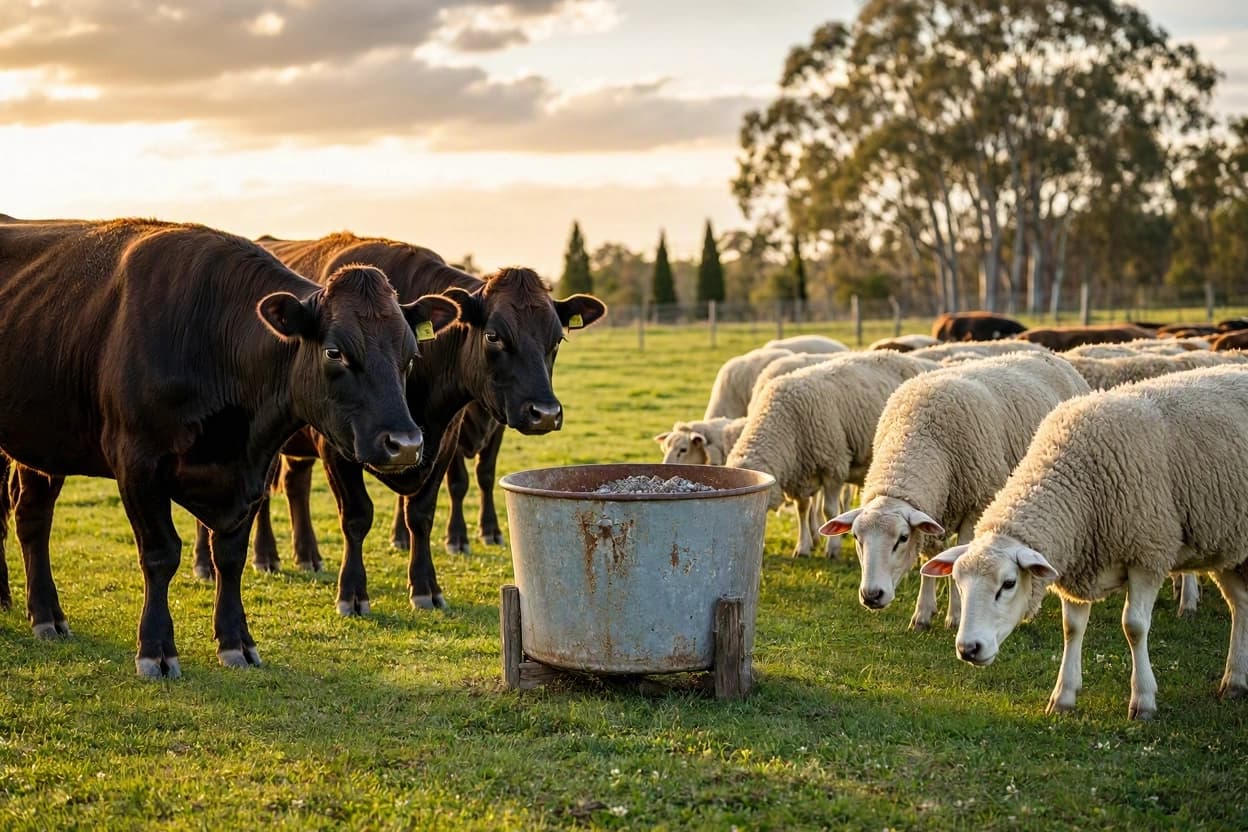
Location drives intake more than total volume. Place troughs away from corners so dominant animals cannot trap others. Give at least two linear feet of space per mature cow and proportionally less for sheep or goats. A trough that lets 5–10 percent of the group drink at once reduces competition.
- Keep troughs on a firm, well-drained pad (concrete or packed gravel) to limit mud and hoof problems.
- Site them 150 feet or more from feeders to spread manure and keep water cleaner.
- Provide shade or use insulated/ball-style waterers in summer so water stays below 80°F; hot water cuts consumption.
- In winter, ensure continuous flow or heating so ice does not block access.
Multiple smaller troughs often work better than one large tank. Timid animals get more chances to drink, and a single failure does not leave the whole group without water.
Keep Water Clean and Palatable
Dirty or stale water reduces intake even when animals are thirsty. Algae, manure, and feed debris accumulate quickly in high-traffic areas.
Daily checks:
- Skim floating debris and empty if the water smells or looks cloudy.
- Scrub sides and bottom at least weekly.
- Confirm the float or valve refills promptly so levels stay consistent.
Animals prefer cool, fresh water. Groundwater or frequently refreshed tanks stay cooler than shallow, sun-exposed troughs. If you use surface water, test for contaminants and consider filtration or a settling tank.
Introduce New Stock to the Water Source
Many animals hesitate at unfamiliar troughs or automatic waterers. For the first few days:
- Offer an open trough or tank they can see and approach easily.
- Place it near the quarantine pen exit so they find it without searching.
- Keep the water level high and the surface calm; some animals avoid deep or noisy systems at first.
- Watch the group. If several animals are not drinking by the second day, add a temporary open container and check for stray voltage or bad taste.
Once they drink reliably, you can transition to permanent automatic systems. Gradual change works better than an abrupt switch.
Practical Takeaways
- Calculate daily needs using the high end of published ranges and add capacity for heat or lactation.
- Give open space around troughs and avoid corner placements.
- Clean daily and scrub weekly; dirty water is refused water.
- Monitor the first 48 hours closely and provide a simple open source if animals hesitate.
- Size inflow so the trough refills within an hour after peak drinking.
Reliable water does not require expensive equipment. Consistent access, clean surfaces, and correct placement protect the investment you just made and give new livestock the best chance to settle and perform.