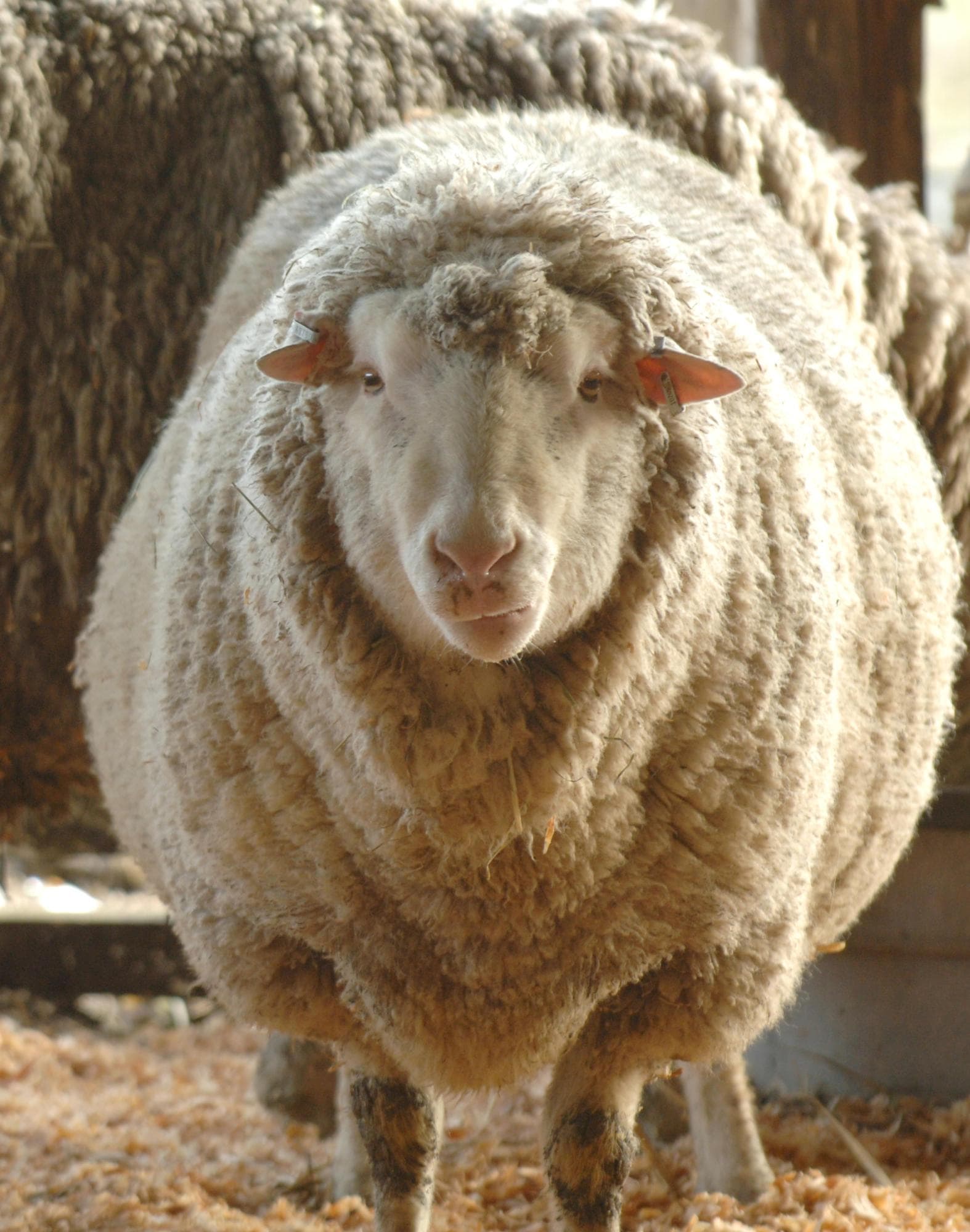
A round listing photo can hide a broken mouth. On a breeding ewe, the front teeth are one of the few age checks you can do in a pen without a scale, a scanner, or the seller's word.
Sheep do not carry a birth certificate on their face. What they do carry is a row of eight incisors on the lower jaw, working against a hard pad on the upper jaw. Those teeth erupt on a rough timetable, then wear, spread, and finally drop. Buyers who skip that look often pay a two-year-old price for a six-year-old mouth.
What the front row actually tells you
Lambs start on milk teeth: small, bright, and all temporary. The first pair of permanent incisors usually comes in around 12 to 18 months, the second pair around 18 to 24 months, the third around 30 to 36 months, and the fourth around 42 to 48 months. A ewe with four pairs of adult incisors is commonly called full mouthed.
That schedule is a guide, not a stamp. Breed, plane of nutrition, and whether she was a late lamb all shift the dates. A hill ewe on sparse grazing can look older in the mouth than a lowland ewe of the same age. Use the teeth with the seller's claimed year, udder, and body, not instead of them.
Molars matter too, but you will not see them in a yard check. The incisors are the practical screen. If they already fail, you do not need a speculum to know she will struggle on short autumn grass.
A simple count before you talk price
- Milk teeth only: still a lamb or hogget. Fine if you want a youngster. Wrong if the ad says proven breeder.
- One or two pairs of adult teeth: rising two-tooth or four-tooth. Useful breeding years ahead if the rest of her checks out.
- Three or four pairs: mature. Ask how many lambs she has reared, not just whether she is in lamb.
- Gaps, long sloping teeth, or a row that no longer meets the pad: broken mouth or failing mouth. She may still rear a lamb this season. She is a poor bet as a flock foundation.
How to look without a wrestling match
Stand to the side, not in front of the horns if she has them. Cup the muzzle, slide a thumb into the corner of the lips, and draw the lower lip down. You want the incisors and the pad, not a full dental exam.
Look for three things. First, are the teeth adult or milk? Adult incisors are broader and more ivory than the small white milk teeth. Second, do they meet the pad, or do they stick forward and miss it? Third, are any missing, loose, or worn to pegs?
A sound full mouth is even, upright enough to nip grass, and free of swelling along the gum. A broken mouth has gaps. A gummy ewe has lost the row. Neither belongs in a listing priced as a four-tooth.
Do this in daylight. A phone torch in a dark shed hides the gap between tooth and pad. If she is wet from a recent drench, wipe the lip so you are not calling mud a missing tooth.
What a worn mouth costs you
Incisors are how a ewe harvests short grass. Once they miss the pad, she wastes jaw work and drops condition on the same pasture her flockmates hold. That shows up as a thin ewe in late winter, a weak lamb, and a higher chance she is culled before she returns the purchase price.
Teeth do not tell you about feet, udder, or what she is carrying. They do tell you how many seasons of grazing she is likely to manage. On Occuin, treat a close-up of the mouth the same way you treat a hoof photo: if it is missing, ask for it before you travel.
A broken-mouthed ewe can still be a fair buy at cull money if you want one more lamb and you have feed to carry her. She is not a fair buy at the price of a four-tooth that will graze for three more seasons. Split those two prices in your head before you open the pen.
Questions worth sending before the visit
- What age do you claim, and can you show the mouth on a call?
- Has she lost any incisors this year?
- Is she on hill grazing or improved pasture? Wear differs.
- Are you selling her as a breeder or as a cull with one crop left?
If the seller will not open the mouth, assume the mouth is the reason. A fair seller of breeding ewes expects the question.
A short decision rule
Pay breeding money for a ewe whose teeth match the age on the listing and still meet the pad. Discount, or walk away, when the mouth is broken and the price is not. A good udder on a failing mouth is a one-season sheep. Price her that way.
Check the teeth in the pen, not from the thumbnail. It takes less than a minute, and it is the difference between a ewe that works for you and one you feed through a winter she cannot graze.